
Integratsiooni Ühiskondlik Algatuskeskus (SICI) September 2025
SICI: a trilingual site for a training centre
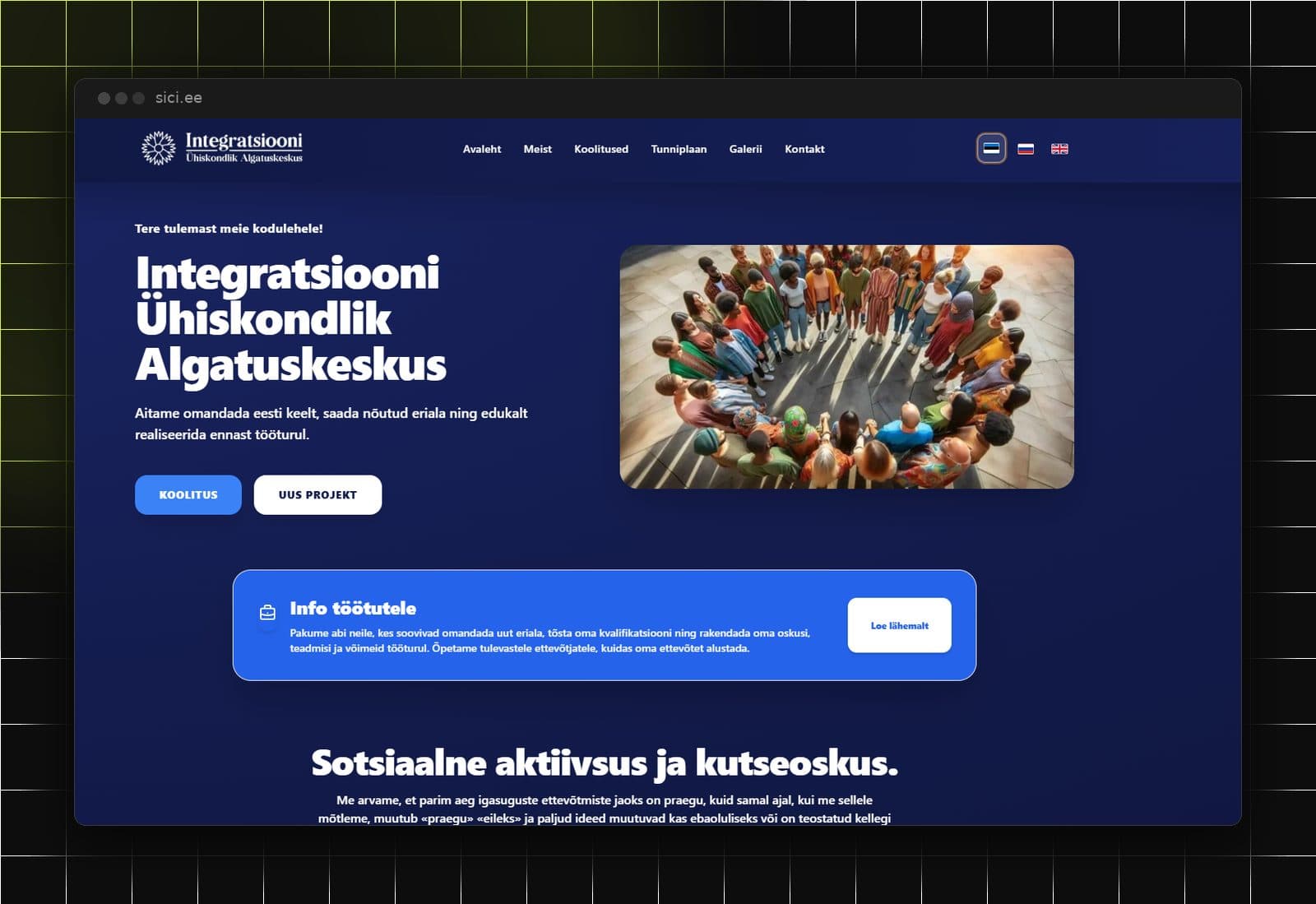
A trilingual site for a Tallinn training and integration centre: a course catalogue, a timetable, a gallery and contact forms. Estonian, Russian and English in one structure, server-rendered.
Integratsiooni Ühiskondlik Algatuskeskus (SICI) is a non-profit association in Tallinn, registered in 1998. The centre runs courses in the Estonian language, IT, maintenance and entrepreneurship, and works with people starting again in Estonia or changing trade. The brief was a site that works in three languages at once and keeps course and timetable information in one place.
What we did
Courses are searched for in two languages — Estonian and Russian — and usually by subject area. So the course section is split by area, and each language version is a full page in its own right rather than a translation strip laid over an existing one.
The timetable is a section of its own, so a learner can see when a course runs without having to ask. The gallery shows the centre's everyday work, and the contact forms take a question straight to the centre.
- Three language versions — Estonian, Russian and English — with a flag switcher
- A course catalogue broken down by subject area
- A timetable section with course times
- A gallery of the centre's work
- Contact forms with the contact details kept visible
- An about page carrying the registration details and the Tallinna Strateegiakeskus and European Social Fund logos
The technical side
Next.js and Node.js, with content held in RozPoint CMS, our own engine. Three languages means three content versions inside one structure: an editor adds a course once and fills in the languages, while the URLs and hreflang follow on their own.
- Server rendering for every content page
- hreflang and a separate URL per language
- RozPoint CMS for courses, the timetable and the gallery
- A mobile layout and Core Web Vitals
Visibility in search and answer engines
Someone looking for an Estonian language course or a retraining option asks either Google or a chat model. For that question to be answerable, every course page opens with one clear description, carries Organization, Course and BreadcrumbList structured data, and is listed in an llms.txt file.
The HTML arrives from the server clean, so a search engine and an answer engine both see the text without waiting on a script. We make no claims about rankings or traffic.
Where it stands
SICI has a site where courses, times and contact details follow one logic in three languages. Adding a new course is editorial work rather than development, and the centre's background — the year it was registered, the address, the partners — is visible straight away.
See the work: sici.ee